
What causes marionette lines and how can you treat them?
Alisha here.
I want to talk about something that comes up in my clinic more often than you might think, and it usually starts with a patient saying something like: “I just look sad all the time, even when I’m perfectly happy.”
It’s that moment when someone asks “are you okay?” and you’re genuinely fine. You’re in a great mood, actually. But your face seems to be telling a different story.
Those lines running from the corners of your mouth down towards your chin, known as marionette lines, can create an expression of permanent sadness or grumpiness that simply doesn’t match how you feel inside.
If that sounds familiar, you’re not alone. And more importantly, if you’re wondering how to get rid of marionette lines, it’s something we can address very effectively without surgery.
In this article, I’m going to explain exactly what marionette lines are, why they form (the anatomy is fascinating), and what I’ve found to be the most effective treatment options in my clinic.
What are marionette lines, exactly?
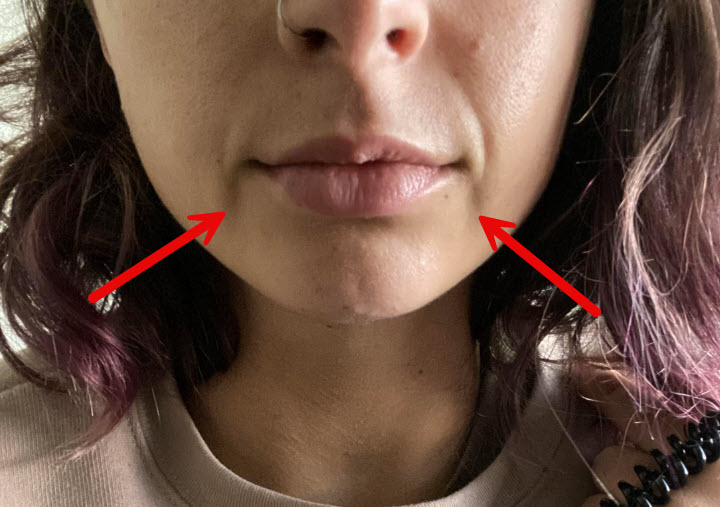
Marionette lines are the vertical creases that run from the corners of your mouth down towards your chin. They get their name from marionette string puppets, which have a similar split at the jaw to allow the mouth to open and close. In medical terms, they’re called melomental folds.
It’s worth knowing how they differ from their close neighbour, the nasolabial fold. Nasolabial folds (sometimes called smile lines) run from the sides of your nose down to the corners of your mouth. Marionette lines pick up where nasolabial folds leave off, continuing from the mouth corners down towards the chin.
They’re related concerns, and I often see patients who have both, but they form through slightly different mechanisms and sometimes benefit from different treatment approaches.
Why do marionette lines form?
This is where it gets interesting, because marionette lines aren’t just “wrinkles from getting older.” There are several specific things happening in your face that contribute.
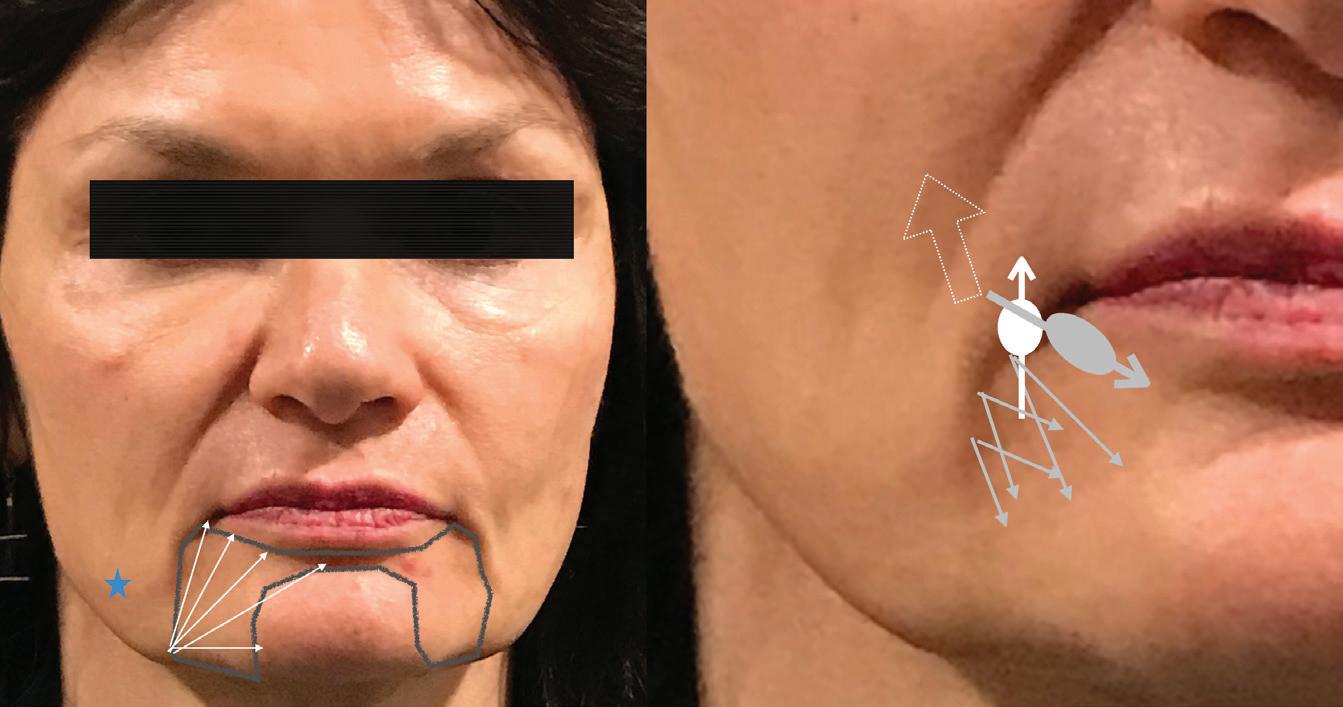
The muscle factor. You have a muscle called the depressor anguli oris, or DAO for short. Think of the DAO as your face’s “frown muscle.” It’s attached to your jawbone at the bottom and connects to the corner of your mouth at the top.
Its job is to pull the corners of your mouth downwards, which is the movement you make when you frown or express sadness.
Over the years, this muscle can become increasingly dominant. It keeps pulling down on the mouth corners, and over time that constant downward tension creates and deepens the crease alongside it.
Research into the anatomical causes of these lines confirms that the DAO plays a central role in their formation.
The volume factor. As we age, we naturally lose fat and volume in the mid-face, particularly in the cheeks. Imagine your cheek volume as a kind of scaffolding that supports the lower face. When that scaffolding starts to reduce, it creates a cascade effect.
The skin and soft tissue that was once supported by cheek volume starts to descend under gravity, deepening the folds around the mouth and chin. Your body also produces roughly 1% less collagen each year from your twenties onwards, so the skin itself becomes thinner and less able to resist these changes.
Other contributing factors. Sun exposure is one of the biggest accelerators because UV damage breaks down collagen and elastin faster than your body can replace them. Genetics also play a significant role. If your parents developed prominent lines, there’s a good chance you may too.
Smoking restricts blood flow to the skin and accelerates the breakdown of collagen. And repetitive facial expressions, while completely natural, contribute to the creasing over time.
In short, these lines form through a combination of muscle pull (the DAO), volume loss in the mid-face, collagen decline, and lifestyle factors like sun exposure and smoking. The mix is different for everyone, which is why some people notice them in their thirties while others don’t see them until their late forties or fifties.
According to the Cleveland Clinic, marionette lines typically become noticeable around age 40, though faint lines can appear earlier.
Why do marionette lines make me look sad when I’m not?
This is probably the most frustrating part for my patients, so I want to explain exactly what’s happening.
Your DAO muscle’s entire purpose is to pull the corners of your mouth downwards. When it’s overactive or dominant (which becomes more common with age), it’s constantly tugging those corners down, even when your face is relaxed. The result is a subtle downturn at the mouth that reads as sadness, displeasure, or tiredness to other people.

I had a patient recently who described it perfectly. She said: “I look in the mirror and I see my mum looking back at me. I look cross. But I’m not cross at all.”
That disconnect between how you feel and how your face appears at rest can genuinely affect your confidence. Some patients tell me they feel they need to consciously hold a slight smile just to look neutral. Others notice it most in photos or on video calls.
Here’s what I always tell my patients: the only “problem” with marionette lines is how they make you feel. If they’re affecting your confidence, that makes it a completely valid concern. I’ll never tell someone they need treatment. But if this is getting in the way of you feeling like your face matches your mood, then we have some very effective options.
What are the treatment options for marionette lines?
There are several approaches to marionette lines treatment, and the best one depends on what’s causing your lines and how pronounced they are. I’ll walk you through the main options, starting with what I use most often in my clinic.
Dermal filler, the go-to treatment for marionette lines
For most patients, dermal filler is the most effective starting point. It works by restoring the volume that’s been lost in the area around the crease, which softens and lifts the line from underneath.
I use hyaluronic acid-based fillers for this area. Hyaluronic acid is a substance that occurs naturally in your skin, so it integrates beautifully with your own tissue. The filler is placed precisely into the fold and the surrounding tissue to restore structure and support.
What I love about filler for marionette lines is that the results are immediate. You’ll see a visible difference before you leave the clinic, though the final result settles over the following one to two weeks as any mild swelling resolves. Results typically last between 9 and 18 months, depending on the product used, the area treated, and your individual metabolism.
The key with marionette lines filler is precision. This area of the face has important blood vessels running through it, and the margin between a natural result and an overfilled one is quite narrow. This is exactly where a practitioner’s anatomical knowledge makes all the difference, and something I’m passionate about as someone who teaches advanced anatomy to other medical professionals.
Anti-wrinkle injections for the DAO muscle
If your marionette lines are partly caused by an overactive DAO muscle (that frown muscle I mentioned earlier), then anti-wrinkle injections can be very effective. This is sometimes referred to as marionette lines Botox, though the treatment targets the DAO muscle specifically rather than the lines themselves.
By placing a small, precise dose of botulinum toxin into the DAO, I can relax its downward pull on the mouth corners. The muscle still functions, but it doesn’t contract with the same force. The result is subtle but meaningful: the corners of your mouth sit in a more neutral or slightly elevated position at rest, which immediately softens the appearance of the lines and reduces that “sad” or “grumpy” look.
Anti-wrinkle treatment for the DAO typically lasts 3 to 4 months. It’s a quick treatment, usually taking less than 10 minutes, and most patients find it very comfortable.
The combination approach, why I often recommend both
Here’s something that most articles about these lines don’t mention: filler and anti-wrinkle injections often work best together.
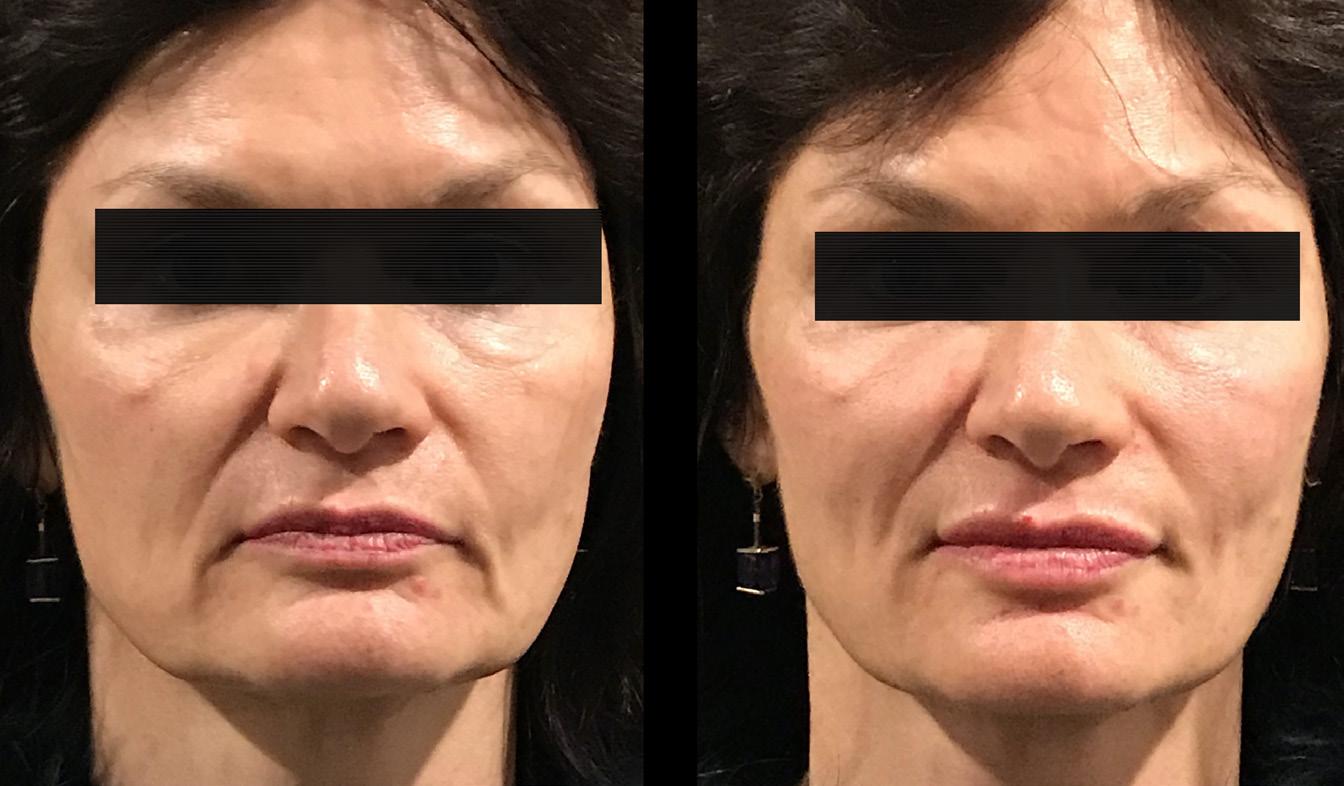
Think about it this way. If the crease is being caused by both volume loss and muscle pull, then addressing only one of those factors will give you an incomplete result. The filler restores the lost volume and smooths the crease. The anti-wrinkle injection relaxes the muscle that’s pulling the corners down and deepening the line.
In my experience, this combination gives the most natural and longest-lasting improvement. The anti-wrinkle injection also helps preserve the filler, because the muscle isn’t constantly working against it.
I don’t always recommend both. For some patients, filler alone is enough. For others with a very strong DAO pull, anti-wrinkle injections on their own can make a significant difference. The right approach depends entirely on your specific anatomy and what’s driving your lines, which is exactly what I assess during your consultation.
Skin quality treatments
For patients who also have thinning, crepey skin around the lower face, I sometimes recommend Profhilo alongside injectable treatments. Profhilo is a bio-remodelling treatment that stimulates your skin’s own collagen and elastin production, improving hydration, firmness, and overall skin quality from within.
It doesn’t replace filler or anti-wrinkle injections, but it complements them beautifully by strengthening the skin itself.
What about surgery?
For deep, well-established lines with significant skin laxity, a facelift (rhytidectomy) is the only permanent solution. I always want to be honest about that.
However, for the vast majority of patients I see, non-surgical treatment provides an excellent improvement without the cost, risk, or recovery time of surgery. I’d always recommend starting with non-surgical options first. If we can achieve the result you’re looking for with filler and anti-wrinkle injections, that’s a far simpler path. And because the results are temporary, you’re never locked into anything.
What does the treatment feel like? Is there any downtime?
Marionette line treatment is generally very well tolerated. For filler, I use a topical numbing cream beforehand, and the products I use contain a local anaesthetic within the filler itself. Most patients describe a feeling of pressure rather than pain.
For anti-wrinkle injections to the DAO, it’s a tiny pinprick on each side. Most patients rate it at about 1 or 2 out of 10 for discomfort. It’s genuinely one of the quickest treatments I do.
After treatment, you might have some mild swelling, redness, or tenderness around the treated area. This is completely normal and usually settles within a day or two. Bruising is possible but not guaranteed.
I’d suggest avoiding alcohol, strenuous exercise, and saunas for 24 hours after treatment, but there’s no real downtime. You can go straight back to your day.
For filler, the initial result is visible immediately, but the final result takes one to two weeks as swelling settles and the product integrates with your tissue. For anti-wrinkle injections, you’ll start to notice the effect after about 5 to 7 days, with the full result at two weeks.
How long do results last?
Dermal filler for marionette lines typically lasts between 9 and 18 months, depending on the product used, the volume placed, and your individual metabolism. Some patients find they need a top-up around the 12-month mark, while others maintain their result for longer.
Anti-wrinkle injections for the DAO last approximately 3 to 4 months. Some patients who maintain regular treatments find the muscle weakens slightly over time, which can extend the interval between appointments.
I see the temporary nature of these treatments as a genuine advantage. It means you’re always in control. You can decide if and when you want to maintain your results, adjust the approach as your face changes over time, and you’re never committed to a permanent alteration.
Think of it like colouring your hair. It’s something you maintain because you love how it makes you feel.
What are the risks, and how do I choose a practitioner?
I believe in complete transparency about risk. No injection is without potential side effects, and you deserve to know what they are.
The most common side effects are bruising, swelling, and temporary tenderness at the injection sites. These are mild and resolve within a few days.
The more serious risks with marionette line filler include vascular occlusion, where filler inadvertently blocks a blood vessel. This is rare, but it’s exactly why anatomical expertise matters so much in this area. The lower face has a complex network of blood vessels, and a practitioner needs to know precisely where they are to avoid them. Having trained on cadavers and helping teach advanced facial anatomy to over 10,000 medical practitioners globally, I take this responsibility very seriously.
For anti-wrinkle injections to the DAO, the main risk is asymmetry, where one side of the mouth responds slightly differently. This is usually very minor and can be corrected with a small adjustment at your review appointment. As with all anti-wrinkle treatments, any effect is temporary and will resolve as the product wears off.
When choosing a practitioner, please look for a qualified medical professional: a doctor, dentist, prescribing pharmacist, or prescribing nurse. They should be registered with a governing body (such as the General Pharmaceutical Council in my case) and should be happy to show you their own patient results. A thorough consultation, transparent risk discussion, and a proper follow-up appointment are non-negotiable standards.
In the UK, the aesthetics industry remains largely unregulated, which means the responsibility to check your practitioner’s qualifications falls on you. A low price is almost always a red flag. You’re investing in expertise, safety, and a natural result.
Thinking about the bigger picture
One thing I always consider with marionette lines is how they relate to the rest of the lower face. They rarely exist in isolation. They’re often connected to nasolabial folds, chin changes, and jawline definition.
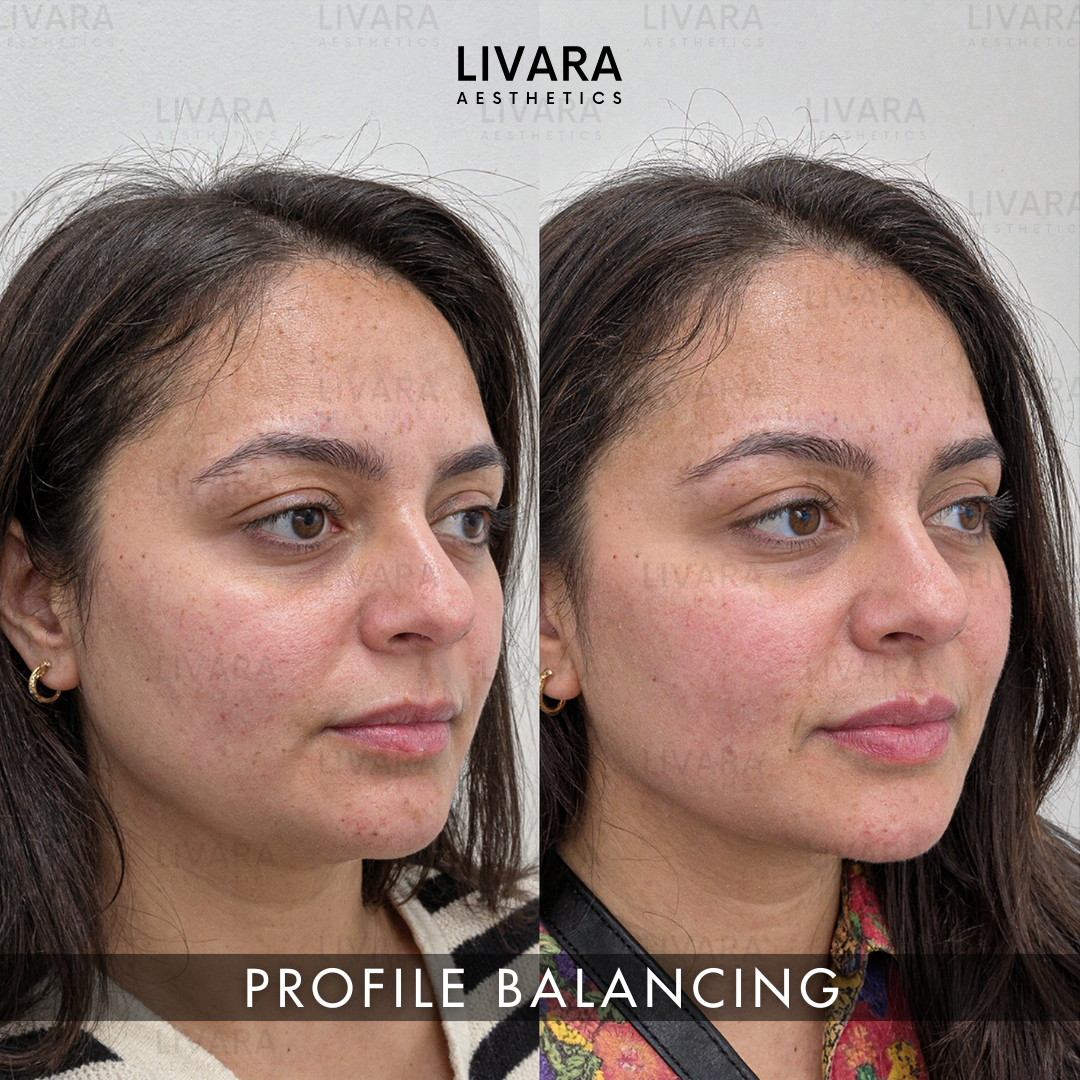
This is why I take a profile balancing approach wherever possible. Rather than treating one line in isolation, I look at your face as a whole and consider how each area relates to the others. Sometimes, restoring a small amount of volume to the cheeks or strengthening the chin projection with chin filler can improve marionette lines more naturally than treating the lines directly.
This holistic thinking is what separates a good result from a great one. It’s not about chasing individual lines. It’s about creating overall facial harmony so your face reflects how you actually feel.
If marionette lines are bothering you and you’re based near my Birmingham clinic, I’d love to help. Feel free to enquire and we can have a proper look at your concerns together, with no pressure and no obligation. The first step is always just a conversation.
