
Nasolabial Folds: What Causes Them and How Dermal Filler Can Help
Alisha here. One of the most common things I hear in consultation is some version of the same thing: “I don’t mind the lines when I’m smiling, it’s that they’re just there all the time now.”
That’s the moment nasolabial folds stop feeling like a normal part of your face and start affecting how you feel about it. You’re not imagining it, and you’re absolutely not alone. It’s one of the most frequent concerns I see at my Birmingham clinic, and the reassuring thing is, it’s also one of the most treatable.
Let me explain what’s actually happening beneath the surface, and what we can do about it.

What are nasolabial folds?
Nasolabial folds are the creases that run from the sides of your nose down to the corners of your mouth. Everybody has them. They’re a completely normal part of facial anatomy, one of the main ways the face expresses emotion, and when we’re young, they only appear dynamically: they show up when you smile and disappear completely the moment your face relaxes.
The change people notice is when they stop disappearing.
You catch your face at rest in a mirror, or in a photograph, and the lines are still there, casting a shadow that makes you look tired or older than you feel. That’s what it means for a fold to become static, and it happens because of structural changes beneath the surface of the skin, not simply because of the skin itself. Understanding that distinction is important, because it explains why the most effective treatments work the way they do.
Most people first notice this in photographs, or in the kind of harsh overhead lighting you get in changing rooms or on video calls.
What causes nasolabial folds to deepen?
Most people assume nasolabial folds deepen because the skin ages and loses its quality. That’s part of the picture, but it’s not the biggest driver. The more significant cause is something happening structurally above the fold, not within it, and most patients have never heard of it before their consultation.
There are three main structural causes, and understanding all three is what shapes how we treat them.
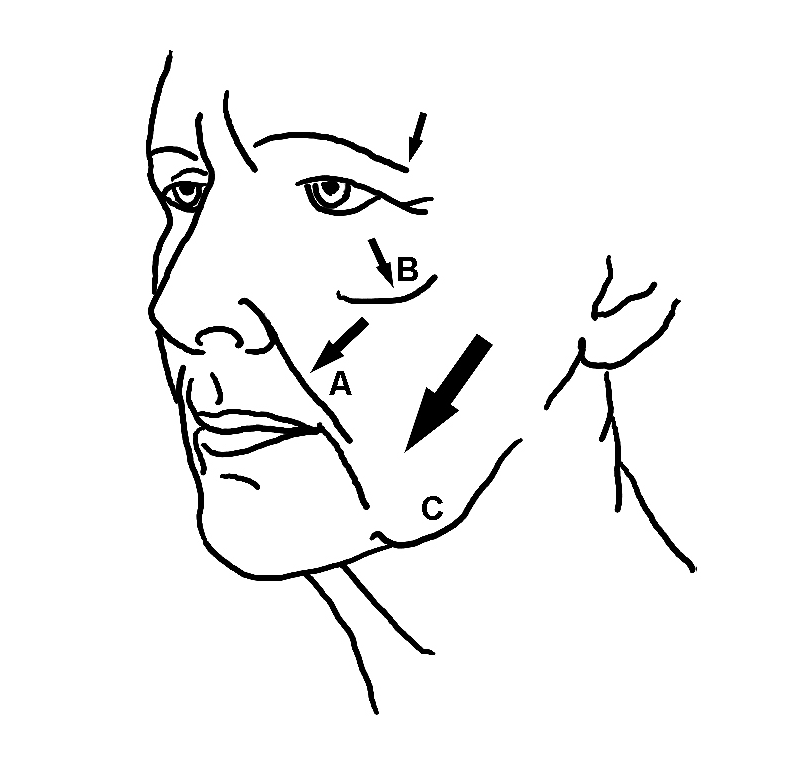
- Fat pad descent is the part most people don’t know about, and it’s the most important one to understand. The face has natural pockets of fat in the midface that give it fullness and help hold the overlying tissue in an upward position. The key one here is the malar fat pad, which sits in the cheek just below the eye. With age, it gradually loses volume and shifts downward. As it descends, it stacks up directly over the nasolabial crease, adding depth to it from above. This is why nasolabial folds often seem to deepen faster than skin ageing alone would explain: there’s a structural shift happening above the fold, and it’s pushing things down onto the crease line. It also explains why treating the fold itself in isolation doesn’t always produce the most natural result. You haven’t addressed where the problem started.
- Collagen and elastin loss is the more familiar part of the story. Collagen is the protein that keeps skin firm and structured. Elastin gives skin its bounce-back quality: if you pinch the skin on the back of your hand and let go, the speed at which it returns to flat is largely down to your elastin levels. Both decline from our mid-20s onwards, steadily and progressively. Research funded by organisations like the British Skin Foundation continues to shed light on exactly how this happens. As collagen and elastin fall, the skin gradually loses its ability to spring back after the thousands of small expressions we make every day, and creases that used to disappear at rest begin to linger. For patients where skin quality is a concern alongside volume loss, Profhilo can complement a filler plan by stimulating collagen and improving overall skin condition.
- Bone remodelling adds a third layer. Most people don’t realise that the bones of the face change with age. The upper jaw gradually loses density and volume over time, and as it does, the soft tissue sitting on top of it has progressively less support. That reduction in the underlying foundation contributes to the settling and sagging of everything above it.
These three factors work in combination, and the effect is cumulative. Sun exposure, smoking, and rapid weight loss can accelerate the process, but these structural changes are the root cause for most patients. It’s also why no amount of topical skincare can reverse established nasolabial folds: the problem is structural, and the solution has to be too.
So, can nasolabial folds actually be treated?
Yes, and effectively, for the right candidate.
Because the root cause is structural, volume loss, fat pad descent, reduced bony support, the most effective treatment is one that addresses that structure directly. Good skincare, SPF, and a healthy lifestyle are genuinely worthwhile for prevention and maintaining skin quality. But for folds that are already established and visible at rest, you need to restore what’s been lost beneath the surface. Moisturiser can’t do that.
That’s where nasolabial fold filler comes in.
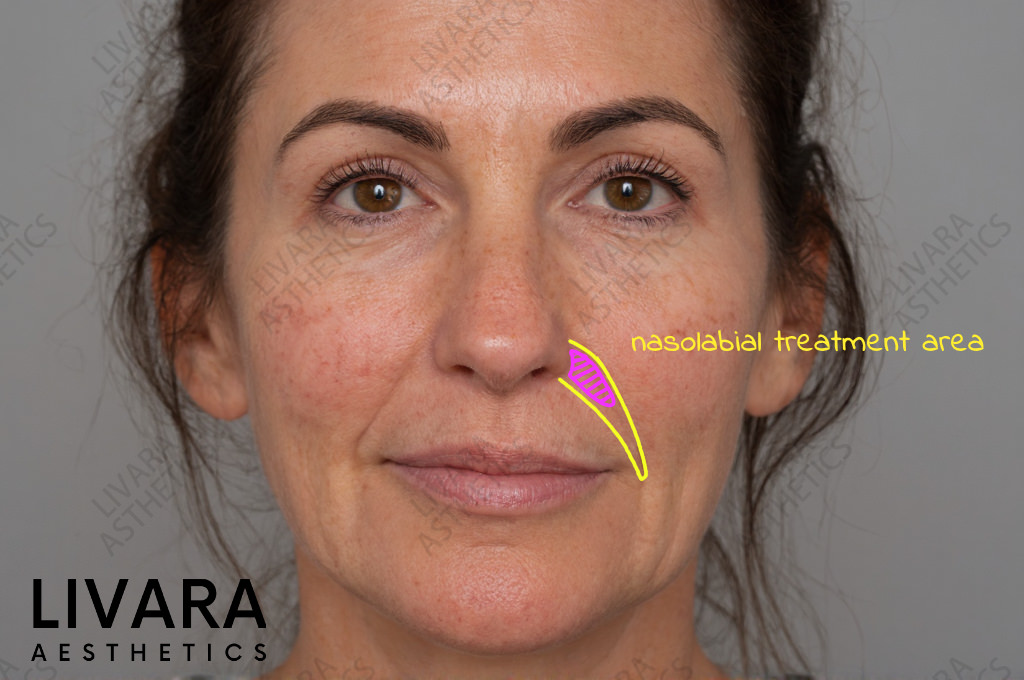
How does dermal filler treat nasolabial folds?
Hyaluronic acid dermal filler works by replenishing the lost volume and lifting the fold from beneath.
There’s an important nuance to how I approach this, and it’s worth understanding, because it’s the difference between a result that looks natural and one that doesn’t. Simply injecting filler directly into the fold can fill the visible line, but it doesn’t address what created it. The result often looks padded or unnatural, because you’ve added volume in the wrong place: to the line itself, rather than to the midface where the volume was originally lost.
The approach I find works better is to restore volume higher up first, in the malar fat pad and cheek area. When you restore the tissue that descended, the fold reduces as a consequence rather than being filled in from below. The result looks like your face rather than like something has been added to it.
In some cases I’ll follow this with a small amount of filler placed precisely along the fold itself to smooth any remaining crease. But the approach is always anatomy-led. Every face is different, and what I plan for yours will be based on a proper assessment, not a formula.
It’s also worth knowing that nasolabial folds and marionette lines, the lines that run from the corners of the mouth toward the chin, often develop together, as they share similar underlying causes. Treating them together as part of a cohesive lower face plan frequently produces a more balanced result than treating either in isolation.

What does treatment look like at my clinic?
We always start with a proper consultation. I want to understand what’s bothering you, and I’ll look at your face from multiple angles, front, three-quarter, and profile, because nasolabial folds often look quite different depending on the viewing angle, and understanding that shapes the treatment plan. I’ll also assess how your face moves, because the way folds behave dynamically tells me as much as how they look at rest.
From there I’ll map out a treatment plan and walk you through exactly what I’m proposing and why, before we proceed with anything.
On the day, I apply numbing cream beforehand. The injections take around 20 to 30 minutes in total. Most patients rate discomfort at around two out of ten; it’s one of the more comfortable treatments I offer.
I’ll book you for a two-week review appointment after your treatment. This is where I assess the settled result, take comparison photographs, and make any fine adjustments if needed.
To understand more about what to expect from start to finish, you can read about my patient journey.
Is it painful? What about recovery?
Discomfort is low for most patients. The numbing cream does most of the work, and the injections themselves are brief.
Afterwards, you can expect some mild swelling and possibly some bruising around the treated area. This is completely normal and settles within a few days. The result you see immediately isn’t the final result; swelling in the first few days can make the treated area look more pronounced than it will end up. Give it two weeks before you assess the outcome: that’s when the filler has fully settled into place.
For the 48 hours after treatment I’d recommend avoiding strenuous exercise, alcohol, and saunas. Beyond that you’re free to get on with your normal day.
How long do results last?
For most patients, nasolabial fold filler lasts between 9 and 18 months. There’s natural variation depending on individual metabolism, the amount of product used, and the specific areas treated.
The product gradually breaks down over time and the fold slowly returns towards where it was, but there’s no sudden moment where the result disappears. It’s a gradual process, and most patients find they want a top-up somewhere in that 9 to 18 month window. Those who maintain their results consistently often find they need less product at each visit, because we’re refining an established result rather than starting from scratch.

Am I a good candidate?
If your nasolabial folds are visible at rest and affecting your confidence, there’s a good chance filler can help significantly.
Patients who see the best results typically have moderate folds where volume loss is the primary driver. For those with more pronounced volume loss across the midface as a whole, a broader approach, treating the cheeks, nasolabial folds, and potentially the lower face together as part of a profile balancing plan, often produces a more harmonious outcome than treating the fold alone.
I’ll always be straightforward with you about what’s realistic for your face specifically. My goal is a result that looks natural and that you actually feel good about, not just a treatment that can technically be done. If you want to verify my credentials before booking, you can check the General Pharmaceutical Council register; all prescribing pharmacists offering injectable treatments should be listed there. The Save Face directory is another useful resource for finding accredited practitioners across the UK.
If you’re based near my Edgbaston, Birmingham clinic and would like to discuss nasolabial fold treatment, feel free to get in touch and we can look at your options together.
Alisha Sodhi (MRPharmS, IP) is a prescribing pharmacist and medical aesthetics practitioner with over 7 years of experience. She is a researcher and educator at Dr Tim Ltd, developing training for practitioners worldwide.